The Transition Together project forms small, social groups of friends, neighbours and colleagues and then supports them in taking a number of effective, practical, money-saving and carbon-reducing steps. A workbook helps each person to build their own Practical Action Plan that improves household energy efficiency, minimises water use, reduces waste (and consumption), explores local transport options and promotes the great value, healthy food available locally. It also helps everyone to understand what’s behind the rising energy prices and climate change, and what this means for them, their family and their local community.
“Unfortunately Rob’s reply to my article A Friendly Criticism of the Transition Towns Movement, didn’t reach me. Here is a response to his comments of 8th Sept. My discussion began by stressing the enormous importance of the Transition Towns Movement, and how inspiring it is. I’m among those who have been arguing for decades that the salvation of the planet can only come via the development of local economies. But for a long time nothing like this emerged, apart from the heroic pioneering of the eco-villagers. But suddenly the Transition Towns Movement has exploded onto the scene, obviously tapping into a widespread recognition that mainstream society is unsustainable.
Marc Wegerif is an old school friend of mine from when I grew up in Bristol. After school he moved to South Africa and was very involved in activism there, and he now lives in Tanzania and works for Oxfam. He recently got back in touch and I sent him a copy of The Transition Handbook. Subsequently he sent me a long and thoughtful letter, with his reflections on the book, and on how it might relate to Africa. The whole question of what Transition might look like in a developing world context is something we have rarely explored at Transition Culture, and Marc has given me permission to reprint his letter here by way of initiating that discussion.
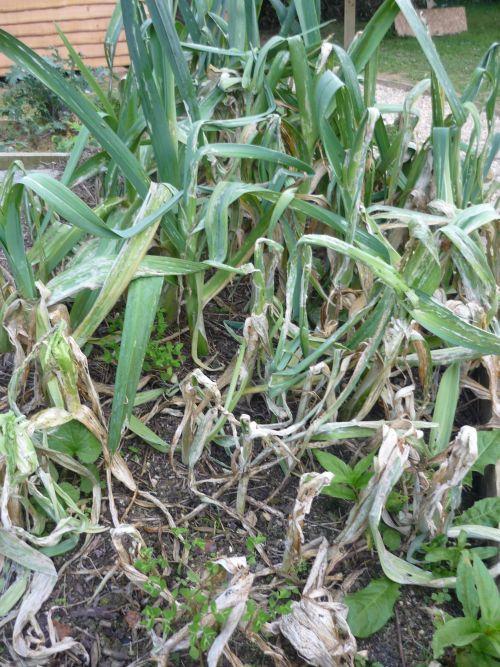
Last year I grew fantastic leeks that stood tall and proud in the garden through the winter months and underpinned many a meal. This year I got them in good and early, and they were looking wonderful. This week though, something has gone horribly wrong. From being proud columns of dark green leeky goodness, they have begun to crumble before my very eyes. Starting somewhere around the middle, they are being turned into slimy ribbons, eventually being reduced to stumps. This is not good. What ails my leeks?
How might our response to peak oil and climate change look more like a party than a protest march? This site explores the emerging transition model in its many manifestations
Read more»
 The Transition Together project forms small, social groups of friends, neighbours and colleagues and then supports them in taking a number of effective, practical, money-saving and carbon-reducing steps. A workbook helps each person to build their own Practical Action Plan that improves household energy efficiency, minimises water use, reduces waste (and consumption), explores local transport options and promotes the great value, healthy food available locally. It also helps everyone to understand what’s behind the rising energy prices and climate change, and what this means for them, their family and their local community.
 As a response to the