Professor Neil Adger is a lecturer and researcher at University of East Anglia. He is a researcher and teacher who specialises in social vulnerability, resilience and adaptation to environmental change; on justice and equity in decision-making; and the application of economics to global environmental change. He is a member of the Resilience Alliance, and is involved in a range of climate change research projects, including the IPCC and work for the Tyndall Centre. He has written many papers on the subject of resilience, and so, for the research I am doing, I was thrilled to be able to interview Neil about resilience, Transition, peak oil, and localisation.
Here’s a short little film, made as part of a forthcoming longer film called ‘The Journey’, capturing the early days of the Transition BS3 community allotment. Discovered on a rummage about on Vimeo and rather sweet.
A while ago, at Schumacher College, Climate Friendly Food was launched, an innovative approach to getting farmers measuring the carbon implications of their farming, definintely worth supporting and checking out. There were some great speakers, including a particularly in-form Martin Crawford of the Agroforestry Research Trust. Here is his talk, and below it, mine. Regular readers will know that Martin is a great hero of mine, and his forthcoming book ‘Creating a Forest Garden’ is eagerly awaited at Hopkins Towers.
On Monday Peter Lipman and I represented Transition Network at an event which could potentially be the day people look back to as the day when UK government finally starting to ‘get’ peak oil. Fascinating and frustrating in equal measure, the event, “Policy Response to potential future oil supply constraints”, was billed as “a half-day workshop hosted by the Energy Institute in partnership with the Department of Energy and Climate Change, under Chatham House Rules”. For those who don’t know what Chatham House rules are, it means that the contents of what was said can be discussed, but none of it can be attributed to anyone. Although the event was meant to be private, it was leaked and reported in the Guardian that morning. Jeremy Leggett was quoted in the piece as describing the importance of the meeting thus: “Government has gone from the BP position – ’40 years of supply left, the price mechanism works, no need to worry’ – to ‘crikey'”. So, here is an account compiled from my notes of what went on behind closed doors, bearing those Chatham House rules in mind, meaning that I can’t attribute some of the comments that follow.
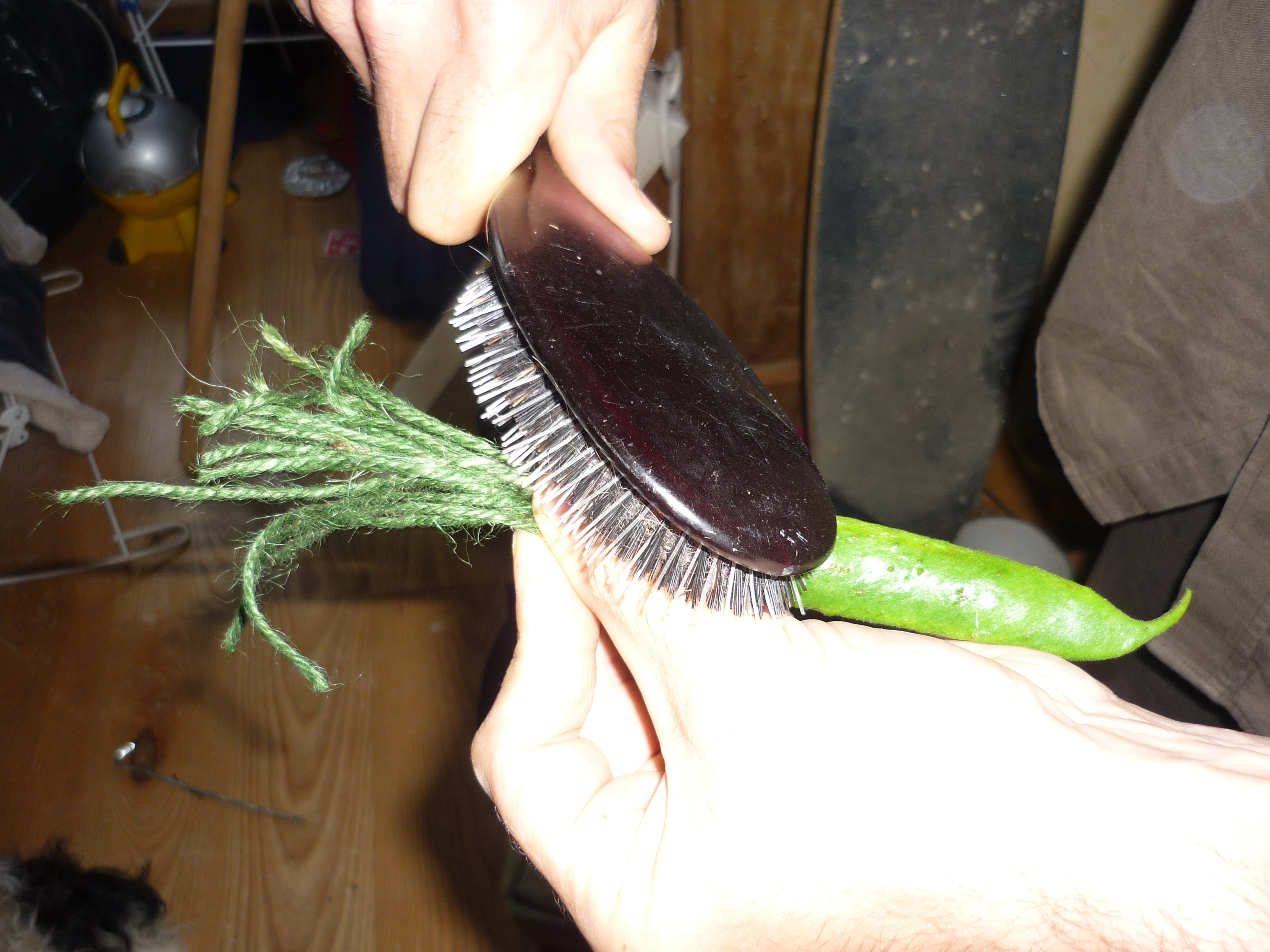
A firm brush and the fibres soon start to separate
Here is a top tip I wrote which appears in the latest edition of Permaculture Magazine, out now.
“One of the key frustrations about the end of the summer months is stringy runner beans. You nurture them, weed them, give them a frame to climb up, yet by the end of the season, many of them are tough, fibrous, and inedible. Last summer, I sat with a large trug of large, stringy runners, thinking of a use for them other than the compost heap. The solution came to me after reading John Paul Flintoff’s ‘Through the Eye of a Needle‘. I have discovered a way of extracting those fibres that prove so hard to digest, in a way that they are actually useful. Here’s how.
How might our response to peak oil and climate change look more like a party than a protest march? This site explores the emerging transition model in its many manifestations
Read more»
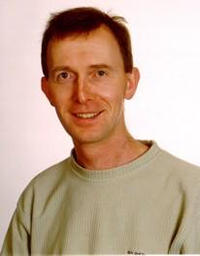 Professor Neil Adger is a lecturer and researcher at University of East Anglia. He is a researcher and teacher who specialises in social vulnerability, resilience and adaptation to environmental change; on justice and equity in decision-making; and the application of economics to global environmental change. He is a member of the Resilience Alliance, and is involved in a range of climate change research projects, including the IPCC and work for the Tyndall Centre. He has written many papers on the subject of resilience, and so, for the research I am doing, I was thrilled to be able to interview Neil about resilience, Transition, peak oil, and localisation.