7 Oct 2009
Carolyn Steel on How Food Shapes Our Cities
Here is one of the best talks I saw at TED 2009 in Oxford, Carolyn Steel, author of the excellent ‘Hungry City’.
Transition Culture has moved
I no longer blog on this site. You can now find me, my general blog, and details of my books, on my new website.
Come find me at robhopkins.net
Showing results 346 - 350 of 401 for the category: Resilience.
Here is one of the best talks I saw at TED 2009 in Oxford, Carolyn Steel, author of the excellent ‘Hungry City’.
Book Review: Sanderson, E.W. (2009) Mannahatta: a Natural History of New York. Abrams, New York. 352pp
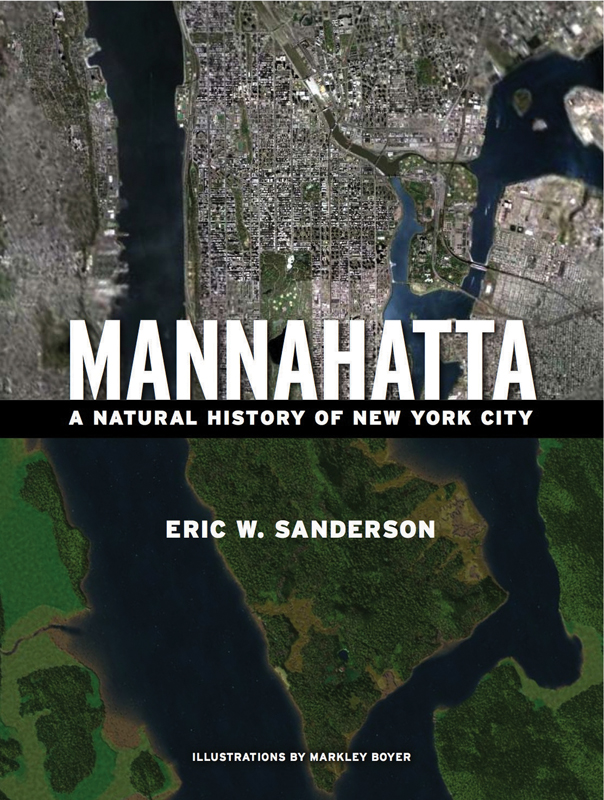 This is a truly remarkable book. The films of Woody Allen were sometimes referred to as being as much love poems to New York as they were love stories themselves. ‘Mannahatta’ and the project from which the book emerges, is a work which expresses such a deep love of place that I often found it quite deeply moving. It is an utterly extraordinary and beguiling work which, by looking both backwards and forwards, allows us to understand New York in a place that was previously impossible.
 Food security and the need for GIS models
As expected, the recent paper ‘Can Totnes and district feed itself?’ has started stirring things up. An intriguing response comes from Colin Tudge, a director of LandShare CIC (co-funders of the research) and leader of the Campaign for Real Farming. Colin’s thesis is that the food security issue is a simple matter of feeding the population as far as practical from local sources, recognising that some trade between specialist production areas will always be necessary. He argues that we simply need macronutrients (energy foods and protein), mainly in the shape of grains, and micronutrients – vitamins and minerals – and that by growing lots of wheat and encouraging more urban horticulture we can feed ourselves. I’m brutally over-summarising, of course, but he is keen to keep things simple.
 As a response to the recent discussions about Ted Trainer’s critique of Transition, Ted recently sent me the following.
“Unfortunately Rob’s reply to my article A Friendly Criticism of the Transition Towns Movement, didn’t reach me. Here is a response to his comments of 8th Sept. My discussion began by stressing the enormous importance of the Transition Towns Movement, and how inspiring it is. I’m among those who have been arguing for decades that the salvation of the planet can only come via the development of local economies. But for a long time nothing like this emerged, apart from the heroic pioneering of the eco-villagers. But suddenly the Transition Towns Movement has exploded onto the scene, obviously tapping into a widespread recognition that mainstream society is unsustainable.
 Marc Wegerif is an old school friend of mine from when I grew up in Bristol. After school he moved to South Africa and was very involved in activism there, and he now lives in Tanzania and works for Oxfam. He recently got back in touch and I sent him a copy of The Transition Handbook. Subsequently he sent me a long and thoughtful letter, with his reflections on the book, and on how it might relate to Africa. The whole question of what Transition might look like in a developing world context is something we have rarely explored at Transition Culture, and Marc has given me permission to reprint his letter here by way of initiating that discussion.