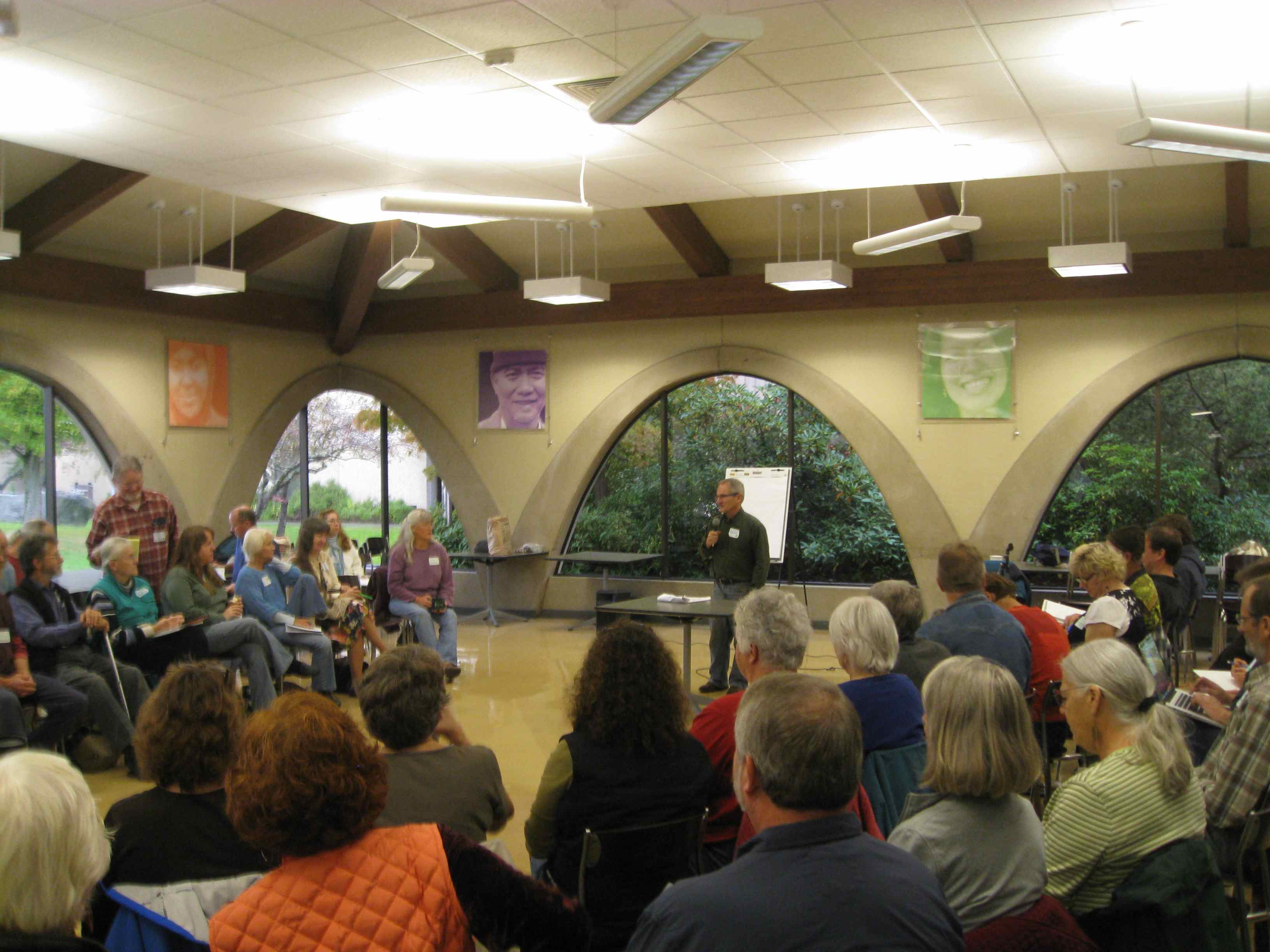
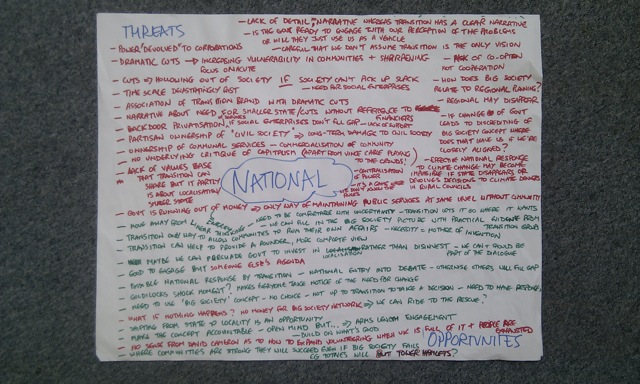
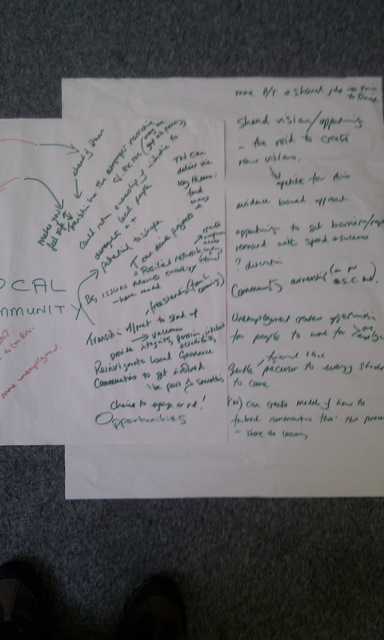
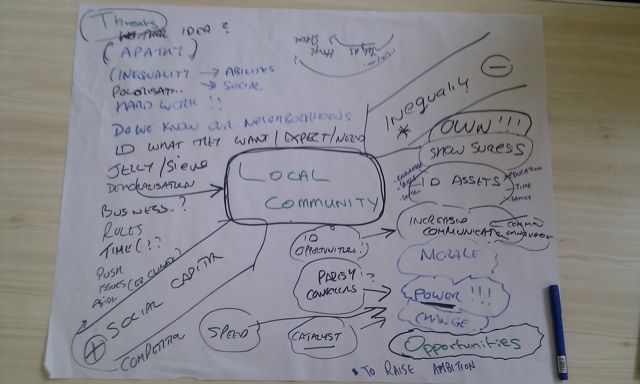
Over 40 people came together in Bristol on Wednesday to explore what the government’s Big Society agenda might mean for Transition initiatives. The venue was the Unitarian Church Hall, and the day proved to be very focused and yielded much insightful thinking and useful ideas. What follows is my attempt to produce a clear record of the event, the ideas and the debates, as well as the suggestions for where this might go next, dragged from my illegible notes, so any mistakes or misrepresentations are entirely my own doing.
Here is a short promotional film made about Transition Streets (premiered at the recent Energy Fair), telling the stories of some of those who have got involved…
Here’s a fascinating (albeit rather lengthy… make yourself a nice cup of tea and sit down to read this with that apple cake you just made), account of a discussion a few people involved in Transition Network held recently to discuss the balance between inner and outer work, and the validity of different ways of knowing. It is offered here in the hope that it stimulates some in depth and insightful comments (I’m sure it will….). The meeting was attended by Sophy Banks, Ben Brangwyn, Naresh Giangrande, Rob Hopkins, Peter Lipman, Hilary Prentice and Fiona Ward, and set out to explore the following four questions:
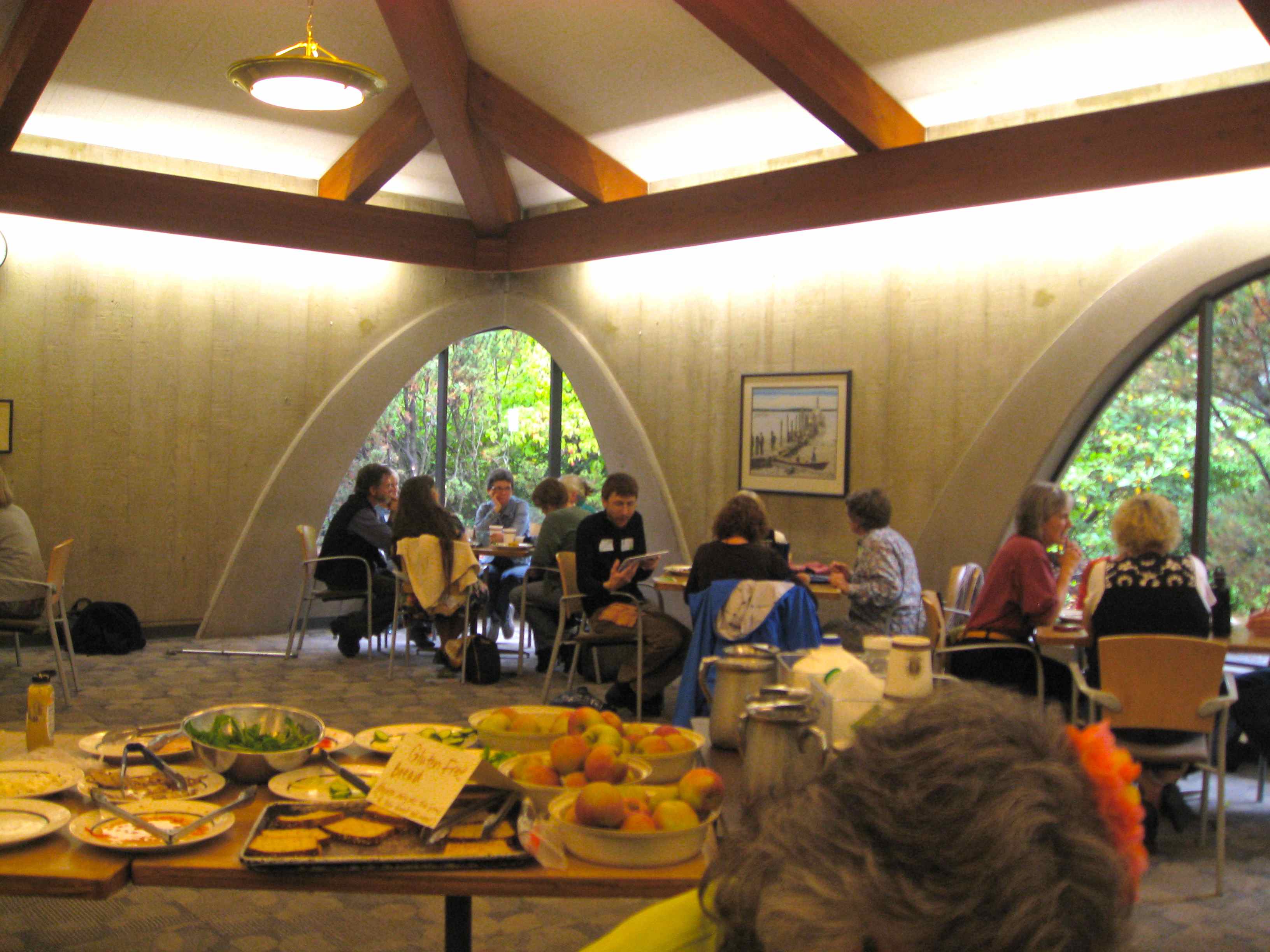
On Thursday, September 15th an historic event took place in the development of Transition on the North American continent. With over 70 people in attendance from across the North West, the first Northwest/Cascadian Transition Summit took place in Seattle. In such a large continent with diverse geographies, bioregional networks can help Initiatives in a given area link in with each other, sharing skills, resources and best practices, and so build strength and support within their bioregion. On this day even national borders were no boundary, with people traveling down from Canada to join in the conversations.
How might our response to peak oil and climate change look more like a party than a protest march? This site explores the emerging transition model in its many manifestations
Read more»
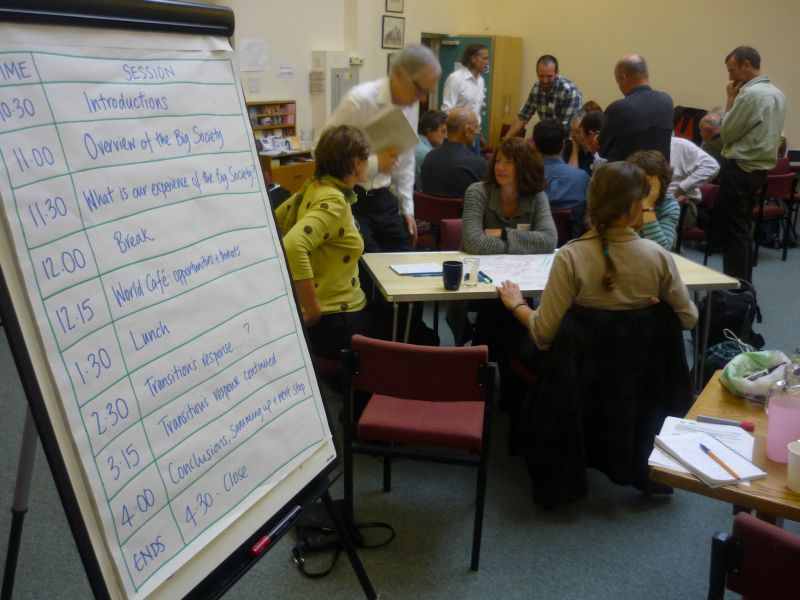 Over 40 people came together in Bristol on Wednesday to explore what the government’s Big Society agenda might mean for Transition initiatives. The venue was the Unitarian Church Hall, and the day proved to be very focused and yielded much insightful thinking and useful ideas. What follows is my attempt to produce a clear record of the event, the ideas and the debates, as well as the suggestions for where this might go next, dragged from my illegible notes, so any mistakes or misrepresentations are entirely my own doing.