Here, as a stand-alone film clip which you might hopefully put on your Facebook pages, email to everyone you know and generally share in the many ways we now can, is the much-celebrated ‘Leaky Bucket’ animation from ‘In Transition 2.0’. Check out the film’s dedicated website for DVD ordering information and much more. Enjoy.
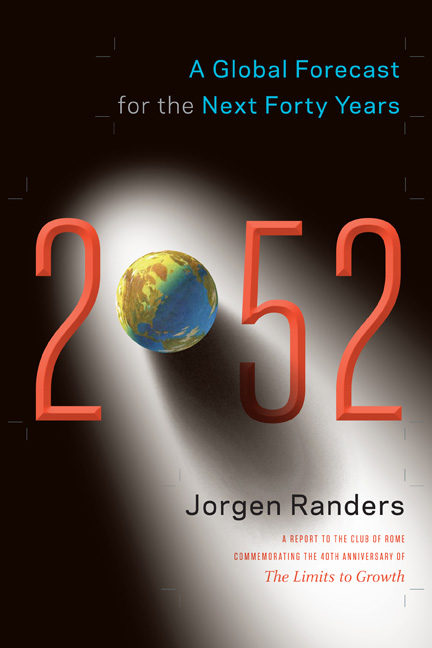
I am reading Jorgen Randers’ new book ‘2052: a global forecast for the next forty years’, due for publication next month. Imagine a ‘Limits to Growth’ for the next 40 years, a presentation of Randers’ best guess as to how the world will pan out between now and 2052. As you can imagine, it’s not an uplifting read, but it is often illuminating, even though I disagree with some of his findings. Surprisingly, the most challenging bit comes at the end of the book, after all the graphs and charts, and talk about 2 degrees of climate change, of our inevitable mega-urbanisation and so on. It will hopefully prove to be the spark for a fascinating discussion here.
Here is a list of the books I am working my way through at the moment or have recently finished, I hope they might point you to some recently published books you may find useful and interesting. So, in no particular order:
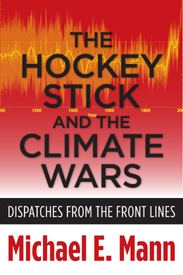
Michael Mann (2012) The Hockey Stick and the Climate Wars: dispatches from the front lines. Columbia University Press.
Michael Mann is the principal creator of the (in)famous ‘Hockey Stick’ graph which showed that the warming of the Earth’s atmosphere over the last 100 years is in excess of historic warming, and clearly linked to increased CO2 emissions. The graph achieved great prominence, as a result of which he became a target of the fossil fuel industry, in particular during the co-ordinated assault on climate science known as ‘Climate Gate’, where emails, including his, were hacked from the University of East Anglia.
I posted the video of this a couple of weeks ago, but I am deeply grateful to Vanessa Kroll who has transcribed it, in case such a thing would be of interest/use to anyone. Here it is:
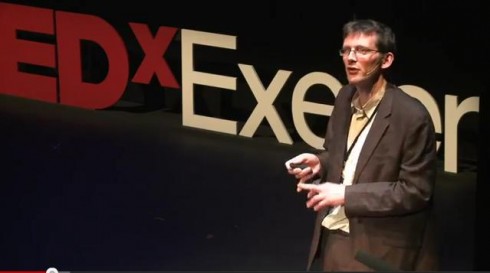
“Hello. I want to tell you a story which pulls together a lot of what we’ve heard already and looks at what that might look like in the context of one place. And it’s a story which I think can change the world. It’s a story which already is changing the world. It’s the story of my town, Totnes, in Devon. A town of about 8,500 people, midway between Exeter and Plymouth. But before I can tell you the story I really want to tell you about Totnes, I have to get another one out of the way first.
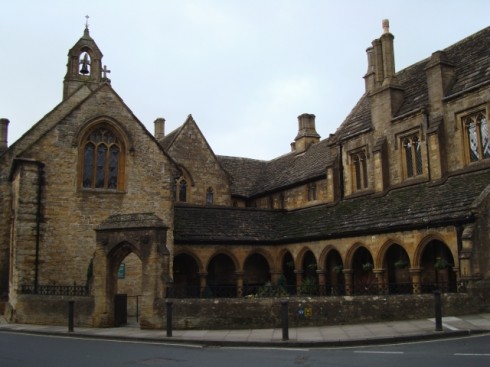
What might we learn from the construction, between1438 and 1448 of the Hospital of St. John in Sherborne (see above) that might shape the way we think about construction in the 21st century? While the bulk of the building was built using local oolitic limestone, it was dressed with Lias stone from Ham Hill, some 12 miles from the building site. However, in those days, without the internal combustion engine, 12 miles was a long way to carry stone (you try it). The meticulous accounts kept of the project at the time show that the cost of transporting the stone by cart cost more than the stone itself. As Alec Clifton-Taylor says in his seminal ‘The Pattern of English Building’, “it was the great difficulty of transporting heavy materials which led all but the most affluent until the end of the eighteenth century to build with the materials that were most readily available near the site, even when not very durable”.
How might our response to peak oil and climate change look more like a party than a protest march? This site explores the emerging transition model in its many manifestations
Read more»